
Hello, I'm Sixto P, and I call San Antonio home.
Craig "The Water Guy" Phillips reached out and asked if I'd be willing to share my real homeowner experience with the SoftPro ECO™ City Water Softener - Best Water Softener Systems for City Water that I bought.
Here's exactly how my journey unfolded, and I genuinely hope my experience helps guide your decision.
The Hard Water Problem That Started It All
Living in San Antonio, I thought our city water was decent enough. Sure, I noticed some white buildup on faucets and my coffee maker needed descaling more often than I'd like, but I figured that was just normal homeowner stuff. Boy, was I wrong.
The real wake-up call came when my wife started complaining about her hair feeling "weird" after showers. At first, I brushed it off, but then I started paying attention to other things around the house. Our glassware had this cloudy film that wouldn't come off no matter how much I scrubbed. The showerheads were getting clogged with mineral deposits every few months. My skin felt tight and itchy after showers, especially during winter.
But the final straw was our water heater.
When the repair technician came out for what I thought was a routine maintenance check, he showed me the mineral buildup inside. "You've got some serious hard water here," he said, pointing to thick, chalky deposits coating the heating elements. "This is going to cut your water heater's life in half if you don't do something about it."
That conversation cost me $300 in repairs and opened my eyes to what hard water was actually doing to our home. San Antonio's water typically runs between 15-20 grains per gallon of hardness - that's considered "very hard" by industry standards. I had never realized that those "minor annoyances" I'd been ignoring were actually costing me money and affecting our daily comfort.
My Research Journey Into Water Softening Solutions
Once I understood we had a real problem, I dove into research mode. I'm the type of person who reads everything before making a big purchase, and a water softener definitely qualified as a significant investment.
I started by getting our water tested properly. The city provides general water quality reports, but I wanted specific numbers for our house. The test confirmed what the repair tech had told me: 18 grains per gallon of hardness, primarily from calcium and magnesium minerals. Our total dissolved solids (TDS) were around 350 PPM, which explained the taste issues I'd been noticing but couldn't quite put my finger on.
The technology research phase was eye-opening. I learned about different approaches: traditional salt-based ion exchange systems, salt-free water conditioners, reverse osmosis systems, and newer technologies like Template Assisted Crystallization (TAC). Each had pros and cons that I had to weigh against our specific situation.
Salt-based systems like the SoftPro ECO use ion exchange resin to literally swap calcium and magnesium ions for sodium ions. This creates genuinely "soft" water but requires ongoing salt purchases and periodic regeneration cycles. Salt-free systems don't remove minerals but change their structure to reduce scaling - they're maintenance-free but don't provide the same soap efficiency and skin benefits.
For our household of four with significant hard water issues, I determined we needed true softening, not just conditioning. The question became: which salt-based system would give us the best combination of performance, efficiency, and value?
I looked at capacity ratings, regeneration efficiency, certifications from NSF International and the Water Quality Association, and warranty coverage. The SoftPro ECO kept appearing in my research as a system that balanced performance with efficiency - particularly important since we're conscious about both salt and water usage.
Why I Chose the SoftPro ECO Over Alternatives
After weeks of comparing specifications and reading user experiences, several factors made the SoftPro ECO stand out from the crowd.
First was the upflow regeneration design. Unlike traditional downflow systems that waste treated water during regeneration, the ECO's upflow process reuses already-softened water, reducing both salt and water consumption by about 30%. With San Antonio's water rates and my environmental concerns, this efficiency advantage was compelling.
The capacity-to-size ratio impressed me too. The 48,000-grain model I selected would handle our family's water usage for 8-10 days between regeneration cycles, based on our measured consumption of about 280 gallons per day. The compact footprint meant it would fit in our utility room without requiring major reorganization.
Build quality was another deciding factor. The ECO uses a Vortech distributor system and high-grade ion exchange resin rated for longer life than standard residential systems. The control valve is manufactured in-house rather than sourced from third parties, which typically means better integration and support.
Certification mattered to me as a credibility indicator. The SoftPro ECO holds NSF/ANSI Standard 44 certification for hardness reduction, meaning independent testing verified its performance claims. Not all residential softeners carry this certification, so it provided confidence in the technical specifications.
The warranty structure sealed the deal: 7 years on the control valve, 10 years on the mineral tank, and lifetime coverage on the resin. That level of manufacturer confidence suggested they expected this system to last, which aligned with my goal of a long-term solution rather than a quick fix.
Unboxing and First Impressions

The SoftPro ECO arrived via freight delivery on a pallet, which immediately communicated that this was serious equipment, not a lightweight consumer gadget. The packaging was industrial-grade - heavy cardboard with foam inserts that protected everything perfectly.
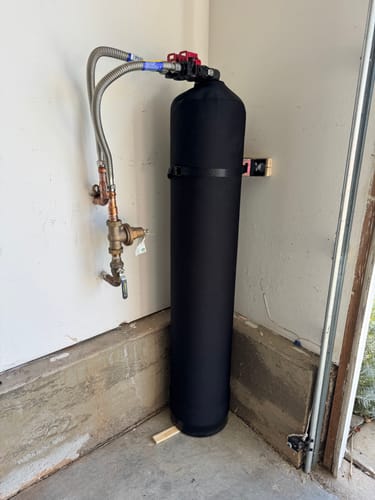
Unpacking revealed a system that felt substantial and well-manufactured. The mineral tank has a thick-walled construction with a smooth, professional finish that looked appropriate for a utility room installation. The control head appeared robust, with clearly labeled connections and a digital display that seemed intuitive even before reading the manual.
What impressed me most was the completeness of the package. Everything needed for installation was included: bypass valve, fittings, drain line, salt efficiency settings chart, and a comprehensive manual that actually made sense. I've bought home improvement products that required additional trips to the hardware store, but SoftPro included all the standard installation components.
The build quality was evident in details like the thick-wall mineral tank construction, quality of the electronic components, and precision of the threaded connections. This wasn't a budget system trying to look premium - it was clearly designed and manufactured for long-term residential use.
One minor surprise was the weight - about 150 pounds total for the complete system. I had mentally prepared for it to be heavy, but moving it into position required two people and some careful planning.
Installation Experience and Setup Process
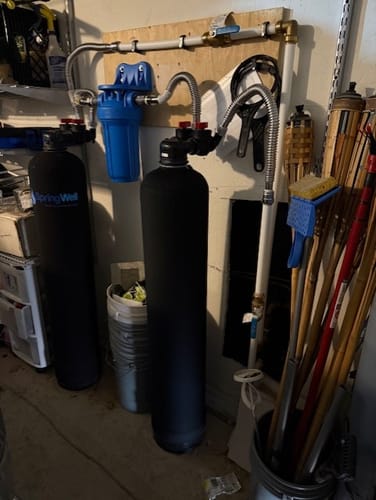
I decided to tackle the installation myself, partly to save money and partly because I enjoy understanding how systems work. The SoftPro manual provided clear guidance, and I had enough plumbing experience to feel confident with the project.
Pre-installation preparation took longer than the actual installation. I needed to install a 110V electrical outlet near the planned location, clear space in our utility room, and plan the plumbing routing. The bypass valve installation required cutting into our main water line, so I scheduled the work for a Saturday when disruption wouldn't affect work-from-home schedules.
The actual plumbing connections were straightforward. The system uses standard 1-inch NPT connections, and the included bypass valve simplified integration with our existing copper lines. I used SharkBite fittings for the connections to avoid soldering in tight spaces - a decision that made the installation much cleaner and faster.
Positioning the system required attention to several factors: clearance for salt loading, access to the control head for programming, drain line Visit this page routing, and electrical connection. The manual specified minimum clearances that I followed carefully to ensure proper ventilation and maintenance access.
Programming the control head was more involved than I expected, but the manual walked through each step clearly. I needed to input our water hardness level (18 grains), household size, and desired regeneration schedule. The system calculates regeneration timing based on actual water usage rather than just time intervals, which optimizes efficiency.
The initial startup process took about an hour - filling the system, running the first regeneration cycle, and checking for leaks. Everything functioned exactly as described, with clear status indicators showing each phase of operation.
Total installation time was about 6 hours, including preparation and cleanup. A professional installer would probably complete it in 3-4 hours, but doing it myself gave me complete understanding of the system layout and operation.
Performance Results After 18 Months of Use
The transformation in our water quality was immediate and dramatic. Within 24 hours of installation, I could feel the difference in shower water - that slippery, "soft" feeling that indicates the minerals have been removed.
I tested the water hardness using both test strips and a digital TDS meter. Pre-softener readings consistently showed 18 grains per gallon and 350 PPM TDS. Post-softener measurements dropped to 0-1 grains hardness and about 320 PPM TDS (the reduction in TDS reflects the mineral removal, while sodium addition replaces some of the dissolved solids).
The soap efficiency improvement was remarkable. Laundry detergent usage dropped by about 40% while achieving better cleaning results. Dish soap lathers much more effectively, and we eliminated the need for rinse aid in our dishwasher. Shampoo and body wash require significantly less product to create the same lather.
Appliance protection became evident over time. Our coffee maker hasn't required descaling in 18 months - previously a monthly necessity. The dishwasher's heating element and spray arms remain free of mineral buildup. Most importantly, our water heater's efficiency has remained consistent, and the repair technician's recent maintenance visit showed minimal mineral accumulation.
The regeneration efficiency has matched manufacturer claims. With our 48,000-grain system and measured water hardness, regeneration occurs every 8-10 days, consuming approximately 40 pounds of salt per cycle. This translates to about 120-150 pounds of salt consumption every three months, costing roughly $15-20 depending on salt prices.
System reliability has been excellent. In 18 months, I've experienced zero mechanical issues, error codes, or performance degradation. The control system tracks usage accurately, and regeneration timing has remained consistent with our household patterns.
Real-World Impact on Daily Life and Ongoing Costs
The practical benefits extend beyond just water quality - they've affected our daily routines and household expenses in ways I didn't fully anticipate.
Personal comfort improvements are significant. My wife's hair feels softer and more manageable. My skin doesn't feel tight or itchy after showers, particularly during dry winter months. These might seem like minor benefits, but they affect daily comfort and reduce the need for additional moisturizers and hair products.
Cleaning efficiency throughout the house improved dramatically. Bathroom fixtures stay cleaner longer without constant mineral buildup. Glassware comes out of the dishwasher spotless without hand-drying or special treatments. Even our windows and car stay cleaner when washed with softened water.
The financial impact has been positive overall. While salt costs about $5-7 monthly, we've saved money on cleaning products, soaps, and appliance maintenance. Our last water heater maintenance cost $50 instead of the previous $200-300 because there was minimal mineral buildup to address.
Grocery shopping simplified because we eliminated bottled water purchases for drinking and cooking. San Antonio's treated water tastes significantly better softened, and we installed a simple carbon filter for drinking water to address any residual chlorine taste.
Laundry results improved noticeably. Clothes feel softer without fabric softener, colors remain brighter longer, and whites stay whiter. Towels maintain their absorbency better because soap residue doesn't build up in the fibers.
The regeneration schedule has been completely transparent to our daily routine. It's programmed to occur at 2 AM when water usage is minimal, and the process completes before anyone's morning shower. The only indication of regeneration is the briefly running drain line - easily ignored.
Maintenance has been minimal and straightforward. Monthly salt addition takes about 10 minutes. I check the system status quarterly and clean the brine tank annually - simple tasks that don't require professional service or specialized tools.
Final Assessment and Honest Recommendation
After 18 months of daily use, the SoftPro ECO has exceeded my expectations in performance and reliability while meeting my efficiency and maintenance goals.
The water quality transformation justified the investment within the first few months through improved appliance performance, reduced product usage, and enhanced daily comfort. The system has operated flawlessly with minimal maintenance requirements and consistent performance.

What impresses me most is the engineering quality. This feels like equipment designed for long-term residential use rather than a disposable consumer product. The control system intelligence, regeneration efficiency, and build quality suggest it will provide reliable service for many years.
Would I purchase the SoftPro ECO again?
Absolutely. The combination of performance, efficiency, and reliability has made it an excellent value for our household.
This system is ideal for homeowners dealing with moderate to severe hard water who want genuine softening rather than just conditioning. Families who use significant amounts of water, have appliances to protect, or experience comfort issues from hard water will see immediate benefits.
However, it's not the right solution for everyone. Households with minimal hard water issues, renters who can't install permanent systems, or people opposed to salt-based treatment should consider alternatives like whole-house filters or salt-free conditioners.
For our situation - a family of four in San Antonio dealing with very hard city water - the SoftPro ECO has been transformative. The initial investment has paid dividends in comfort, convenience, and long-term savings that make it one of the better home improvement decisions I've made.
If you're dealing with hard water issues similar to ours, I'd recommend getting your water tested, calculating your capacity needs, and seriously considering the SoftPro ECO as a long-term solution. The performance and efficiency gains have made it an integral part of our home's infrastructure that I wouldn't want to live without.