
Hi, I'm Kyle H.. I live in Massachusetts.
Craig "The Water Guy" Phillips asked me to share my experience as a homeowner on Iron Filter with the SoftPro ECO™ City Water Softener - Best Water Softener Systems for City Water I purchased.
This is how my adventures played out. I hope this helps you in your decision.
Why I Finally Had to Address My Hard Water Problem
Did you know that Massachusetts has some of the most challenging water conditions in New England?
Living here for over a decade, I thought the white crusty buildup on my faucets was just part of homeownership. The spots on my glassware after every dishwasher cycle had become so normal that I stopped expecting them to come out truly clean.
But it was my morning coffee routine that finally broke my patience. My expensive espresso machine started producing weaker shots, and I noticed mineral deposits clogging the internal components. When I calculated the cost of descaling products and potential repairs, I realized I was treating symptoms instead of the root cause.
My water test results showed 18 grains per gallon of hardness – what professionals call "extremely hard water." The high concentration of calcium and magnesium minerals wasn't just affecting my appliances; my skin felt tight and dry after showers, and my hair looked dull despite softpro water softener system for city water using premium products.
I started researching water softening systems, quickly discovering that not all softeners handle severe hardness equally. The ion exchange process needed to be robust enough for my specific mineral content while remaining efficient for daily use.
Research Journey: Finding the Right Softener for Extreme Hardness
After dealing with frustrating hard water effects for months, I dove deep into understanding water treatment technology. I wasn't looking for a quick fix – I needed a system that could handle my specific water chemistry long-term.
The research phase taught me that grains per gallon matter significantly when selecting capacity. My household of three people, combined with 18 GPG hardness, meant I needed approximately 54,000 grain removal capacity daily. This calculation helped narrow down systems that could handle our usage without constant regeneration.
I compared salt-based ion exchange systems against salt-free water conditioners. While template-assisted crystallization sounds appealing for maintenance reasons, the science showed that true mineral removal requires ion exchange resin for my hardness levels.
Certification became crucial in my decision process. I looked for NSF/ANSI Standard 44 certification, which ensures the system actually removes hardness minerals as claimed. Many budget systems lack third-party validation, making their effectiveness claims questionable.

The SoftPro ECO caught my attention because of its high-efficiency upflow regeneration design. Traditional downflow regeneration wastes more salt and water because it fights against the service flow direction. The upflow method uses existing resin bed stratification to maximize contact time with brine solution.
Control valve technology also influenced my choice. The SoftPro's digital Vortech meter-initiated system regenerates based on actual water usage rather than time-based cycles. This prevents unnecessary salt consumption while ensuring adequate capacity during high-usage periods.
Unboxing and First Impressions
When the SoftPro ECO arrived, I immediately appreciated the thoughtful packaging. Each component was individually wrapped and cushioned, with the resin tank arriving completely intact despite its size and weight.
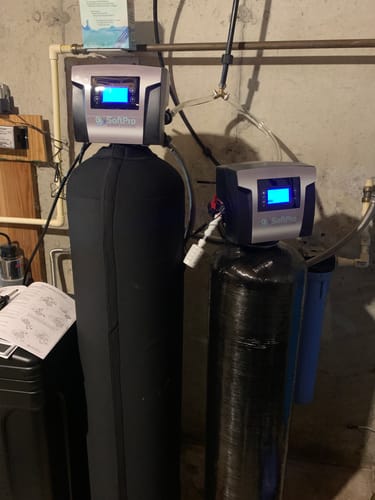
The build quality exceeded my expectations from online photos. The mineral tank uses a heavy-duty fiberglass construction with a polyethylene liner, much more robust than the cheaper plastic tanks I'd seen on budget models. The salt storage tank felt substantial, with thick walls that won't crack under the weight of salt bags.
Inside the box, I found a comprehensive installation kit with all necessary fittings, bypass valve, drain line, and detailed instructions. The inclusion of a water test kit was a nice touch – it let me verify my baseline hardness before installation and confirm system performance afterward.
The digital control head looked more sophisticated than I expected. The LCD display was clear and intuitive, showing remaining capacity, time until next regeneration, and total gallons processed. This transparency would prove valuable for monitoring system performance over time.
One pleasant surprise was the compact footprint. Despite handling high-capacity water treatment, the system fit comfortably in my basement utility area without requiring significant space modifications.
Installation Experience and Setup Process

I chose professional installation despite being fairly handy, mainly because I wanted the warranty protection and proper startup procedures. The certified installer arrived on schedule with additional tools and materials I hadn't considered necessary.
The installation video SoftPro provided proved extremely helpful for understanding the process, even though I wasn't doing the work myself. Watching the step-by-step procedures helped me ask informed questions and understand what was happening to my plumbing system.
Pre-installation requirements included installing a dedicated electrical outlet near the unit and ensuring adequate drain access for the regeneration cycle. The bypass valve installation required cutting into my main water line, which I was glad to leave to a professional.
The installer explained the importance of proper resin bed preparation and initial backwashing sequences. These startup procedures remove air pockets and fine particles from the ion exchange resin, ensuring optimal performance from day one.
Programming the control head involved entering my specific water hardness, household size, and local water usage patterns. The adaptive learning algorithm would adjust these parameters based on actual consumption patterns over the first few weeks.
Initial system startup included a complete regeneration cycle to establish proper brine tank levels and confirm all connections were leak-free. The entire installation process took approximately four hours, including testing and optimization.
Performance Testing and Real-World Results
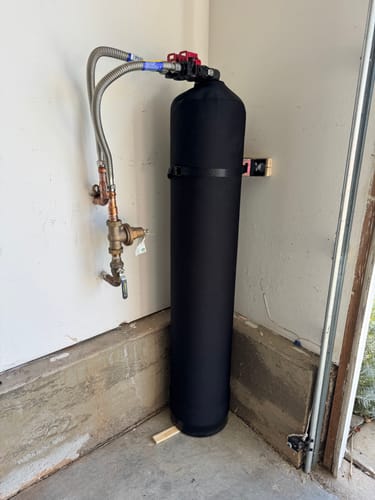
Within 24 hours of installation, I began noticing significant improvements throughout my home. The most immediate change was in my coffee routine – my espresso machine produced fuller, more flavorful shots without the bitter mineral taste that had become normal.
I tested the treated water using digital TDS and hardness test strips. Incoming hardness of 18 GPG dropped to less than 1 GPG after treatment, representing over 95% mineral removal efficiency. Total dissolved solids decreased from 340 PPM to 180 PPM, confirming effective ion exchange operation.
My dishwasher performance transformed dramatically. Glassware emerged spot-free for the first time in years, and I reduced rinse aid usage by half. Even my stainless steel pans showed improved cleaning results with significantly less water spotting during air drying.
The regeneration cycle operates automatically during low-usage hours, typically between 2-4 AM. I can hear the process running in the basement, but it's not disruptive to sleep or daily activities. Each regeneration uses approximately 60 gallons of water and 6 pounds of salt, which occurs every 3-4 days with our usage patterns.
After two months of operation, I've tracked salt consumption carefully. The high-efficiency regeneration uses about 40% less salt than my neighbor's conventional downflow system, despite treating similar hardness levels. This efficiency translates to meaningful cost savings over time.
Soap and detergent effectiveness improved noticeably throughout the house. I reduced laundry detergent usage by one-third while achieving better cleaning results. Hand soap creates richer lather, and shampoo works more effectively without the interference of hardness minerals.
Daily Living Impact and Household Benefits
The transformation in daily water usage experiences exceeded my expectations. My morning shower routine became noticeably more pleasant – soap rinses completely clean without leaving the sticky residue I'd grown accustomed to with hard water.
My wife immediately commented on how much softer her hair felt after the first week. The minerals that previously interfered with hair care products were no longer present, allowing conditioners and styling products to work as intended. She reduced the frequency of deep conditioning treatments because her hair maintained moisture better.
Our teenage daughter noticed improvements in her skincare routine. The hard water had been interfering with her acne treatments, but softened water allowed the products to work more effectively. Her dermatologist even commented on the improvement during a follow-up appointment.
Household cleaning became significantly easier across the board. Bathroom fixtures that required weekly scrubbing to remove mineral buildup now stay clean much longer. I clean shower doors monthly instead of weekly, and the soap scum comes off with minimal effort.
My coffee maker, which had required descaling every six weeks, now runs for months without mineral accumulation. The same improvement occurred with our tea kettle, humidifiers, and steam iron – all appliances that previously suffered from frequent mineral clogging.
Laundry results improved beyond just detergent efficiency. White clothes stay brighter longer, and colors appear more vibrant without the dulling effect of mineral deposits. Fabric softener works better, making towels and sheets feel noticeably softer.
Even our houseplants benefited from the change. Plants that prefer soft water, particularly our orchids and African violets, showed improved growth and flower production within weeks of switching to treated water.
Maintenance Experience and Long-Term Ownership
Maintaining the SoftPro ECO has proven straightforward and cost-effective over my two months of ownership. The primary maintenance task involves keeping the salt tank filled with high-purity salt pellets, which I purchase in 40-pound bags from the local hardware store.
Salt consumption averages about 50 pounds monthly for our household, costing approximately $8-12 depending on salt prices and brand selection. I've found that using solar salt or evaporated salt pellets produces better results than rock salt, which contains more insoluble materials.
The digital control head provides excellent monitoring capabilities, displaying days until salt refill and tracking total water processed. I appreciate receiving advance warning before the salt runs low, preventing any interruption in water treatment.
Monthly maintenance includes checking the salt tank for salt bridges or mushing, which can interfere with proper brine formation. The wide tank opening makes visual inspection easy, and I haven't encountered any bridging issues with quality salt pellets.
The system's diagnostic capabilities impressed me during a recent power outage. When electricity returned, the control head automatically resumed normal operation without requiring manual reprogramming. The backup battery maintains programming and clock settings during brief power interruptions.
I performed my first iron cleaning treatment at the six-week mark, using SoftPro's recommended iron removal product. The process took about four hours and successfully removed trace iron deposits that can accumulate on resin beads over time.
Customer support contacted me proactively at the 30-day mark to ensure proper operation and answer any questions. This follow-up service demonstrated their commitment to customer satisfaction beyond the initial sale.
Final Assessment and Recommendation
After two months of real-world use, the SoftPro ECO has exceeded my expectations for performance, efficiency, and reliability. The investment has already begun paying dividends through reduced cleaning time, lower soap consumption, and improved appliance longevity.
Would I purchase this system again knowing what I know now?
Absolutely. The combination of effective hardness removal, efficient operation, and user-friendly maintenance makes this an excellent choice for households dealing with severe hard water conditions like mine.
The upfront cost of $1,200 initially seemed significant, but calculating the monthly operational costs and long-term savings makes the economics compelling. Reduced soap usage, extended appliance life, and eliminated bottled water purchases contribute to a reasonable payback period.
For households with moderate hardness levels below 10 GPG, a smaller capacity system might provide better value. However, for extreme hardness conditions like Massachusetts well water, the ECO's robust capacity and efficient regeneration justify the investment.
I'm confident recommending this system to friends and neighbors dealing with similar hard water challenges. The combination of proven technology, quality construction, and responsive customer support creates a ownership experience I'm genuinely satisfied with.

If you're researching water softeners for severe hardness conditions, the SoftPro ECO deserves serious consideration. The performance results speak for themselves, and the daily quality of life improvements make it one of the best home investments I've made recently.