
Hi, I'm Vic S. I live in Maryland. Craig "The Water Guy" Phillips asked me to share my homeowner experience with local tap water from the city and the SoftPro ECO™ City Water Softener - Best Water Softener Systems for City Water I purchased. This is how my adventures played out. I hope this helps you in your decision.
Eight months ago, I was at my breaking point with our city water. Sure, it met all the safety standards, but living with it daily was becoming increasingly frustrating. My wife constantly complained about her hair feeling like straw after showers, our glassware emerged from the dishwasher looking like it had been through a sandstorm, and don't get me started on the soap scum that seemed to multiply overnight in our bathrooms.
The final straw came when our relatively new stainless steel appliances started showing white, chalky buildup that no amount of scrubbing could completely remove. I realized we needed a real solution, not just another band-aid approach. That's when I started researching water softening systems and eventually landed on the SoftPro ECO.
I'll be completely honest with you about what I've experienced - both the impressive improvements and the few quirks I've discovered along the way. If you're dealing with similar water issues and considering this investment, here's everything I wish I had known before making the purchase.
The Hard Water Reality That Pushed Me to Act
Did you know that over 85% of American homes deal with hard water?
I certainly didn't realize how widespread this issue was until I started researching. Our water in Maryland tests at around 12 grains per gallon of hardness - what the water treatment industry classifies as "very hard." For context, anything above 7 grains per gallon is considered hard enough to cause noticeable problems.
The science behind hard water is actually pretty straightforward. As municipal water travels through underground pipes and treatment facilities, it picks up dissolved minerals - primarily calcium and magnesium. These minerals aren't harmful to drink, but they wreak absolute havoc on everything else.
In our household, the problems manifested everywhere:
My wife spent extra money on clarifying shampoos and deep conditioning treatments, trying to combat the dryness and buildup. Our teenage daughter constantly battled skin irritation, especially in winter when the dry air combined with mineral-laden water created the perfect storm for sensitivity.
The financial impact was sneaking up on us too. We were going through dish soap and laundry detergent at twice the normal rate because hard water interferes with soap's ability to create suds and clean effectively. I calculated we were spending an extra $40-50 monthly just on cleaning products that weren't working as efficiently as they should.
But the real wake-up call was when our HVAC technician pointed out mineral buildup in our hot water heater during a routine maintenance visit. He explained that hard water creates scale deposits that force water heaters to work harder and fail earlier. Suddenly, I wasn't just looking at inconvenience and extra soap costs - I was staring at potential major appliance replacements.
I tested our water with a simple TDS (total dissolved solids) meter I picked up online. The reading came back at 380 parts per million - well into the range that causes noticeable problems. That number convinced me we needed a systematic solution, not just better cleaning products.
My Research Journey and Why I Chose SoftPro ECO
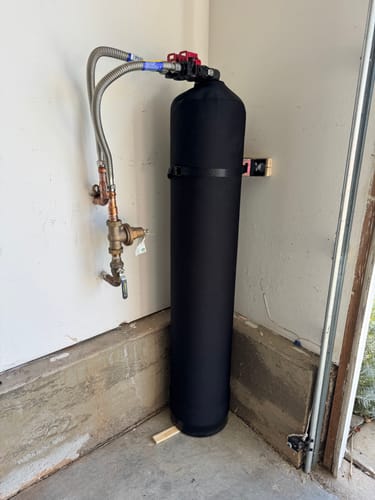
Once I committed to solving our hard water problem, I dove deep into research. I'm the type of person who reads customer reviews until my eyes hurt and compares specifications until I understand exactly what I'm buying.
Initially, I looked at salt-free water conditioners because the idea of no ongoing salt purchases appealed to my wallet. However, after reading numerous technical articles and speaking with a local water treatment professional, I learned that these systems don't actually remove hardness minerals - they just change their structure to reduce scale buildup. While that helps with appliance protection, it doesn't address the soap performance or personal care issues we were experiencing.
That led me to traditional ion exchange water softeners, which actually remove calcium and magnesium ions by swapping them with sodium ions. This process creates truly "soft" water that works properly with soaps and doesn't leave mineral deposits.
I narrowed my search based on several key factors:
Capacity and Efficiency: With four people in our house and moderate to high water usage, I needed a system that could handle demand without constant regeneration cycles. The SoftPro ECO's 48,000 grain capacity seemed right-sized for our needs.
Regeneration Technology: I wanted a demand-initiated regeneration system rather than a timer-based one. This means the system only regenerates when it's actually depleted, saving salt and water. The SoftPro ECO uses advanced metering to track actual water usage and hardness removal.
Build Quality and Components: I researched the internal components extensively. The SoftPro ECO uses high-quality resin and comes with their proprietary SoftPro Valve, which has a solid reputation for reliability and precise control.
Certification and Testing: NSF certification was non-negotiable for me. The SoftPro ECO meets NSF/ANSI 44 standards for water softening performance, which provides independent verification of its capabilities.

Company Reputation and Support: I spent time on forums and review sites looking for real user experiences. SoftPro consistently received positive feedback for both product performance and customer service responsiveness.
The deciding factor was finding several detailed reviews from homeowners with similar water conditions who reported excellent long-term performance. The combination of appropriate capacity, proven technology, and strong user feedback made the SoftPro ECO the clear choice for our situation.
Unboxing and First Impressions
The SoftPro ECO arrived on a Thursday morning via freight delivery, packed securely on a wooden pallet. The driver helped move it to my garage, which I appreciated since the complete system weighs around 150 pounds.
Opening the packaging revealed a well-built system that immediately felt substantial and professional-grade. The mineral tank has a heavy-duty fiberglass construction with a smooth, durable finish. The SoftPro Valve mounted on top looked robust and well-engineered, with clear labeling and quality connectors.
What impressed me right away was the attention to detail in the packaging. Every component was individually wrapped and protected, and the included documentation was comprehensive without being overwhelming. The installation manual was particularly well-written, with clear diagrams and step-by-step instructions that actually made sense.
The brine tank arrived separately and proved to be much sturdier than I expected. It's made from thick, food-grade polyethylene with a tight-fitting lid and built-in safety features to prevent overflow. The internal brine well and float assembly looked well-designed and durable.
One pleasant surprise was the quality of the included fittings and bypass valve. These components often get cheaped out on with some manufacturers, but SoftPro included professional-grade brass fittings that matched what I'd expect to see in a commercial installation.
My only minor concern during unboxing was that some components arrived without protective plastic wrap, showing minor scuffs from shipping. Nothing that affected functionality, but it made me wonder about quality control during packaging.
Installation Experience and Initial Setup

I'm reasonably handy with plumbing projects, so I decided to tackle the installation myself rather than hiring a professional. This decision saved me around $300-400 in installation costs, though it did require a full Saturday of work.
The installation location was my first challenge. The system needed to be positioned where the main water line enters our house, with access to electrical power for the SoftPro Valve, and near a drain for the regeneration cycles. I ended up installing it in our basement utility room, which required running a new 110V outlet but provided excellent access to all necessary connections.
The plumbing connections were straightforward but required careful measurement and planning. I installed the bypass valve first, which allows you to isolate the system for maintenance without shutting off water to the entire house. The SoftPro ECO uses standard 1-inch connections, which matched our existing plumbing perfectly.
One aspect that took longer than expected was setting up the drain line for the regeneration cycles. The system needs to discharge approximately 50 gallons of water during each regeneration, and this water contains concentrated minerals and salt. I ran a dedicated drain line to our utility sink rather than connecting to the floor drain, which gives me better control and monitoring capability.
Programming the SoftPro Valve was surprisingly intuitive. The digital display walks you through the setup process, asking for your water hardness level, household size, and preferences for regeneration timing. I set it to regenerate at 2 AM when our water usage is minimal, and programmed it for our measured hardness level of 12 grains per gallon.
The initial startup and first regeneration cycle took about 90 minutes. I stayed nearby to monitor everything and ensure all connections were leak-free. The system operates quietly during normal use, but the regeneration cycle does produce noticeable sounds - not loud enough to wake us upstairs, but definitely audible if you're in the basement.
By Sunday morning, we had fully soft water throughout the house. The difference was immediately noticeable in our morning showers, with soap and shampoo producing much richer lather and our skin feeling noticeably different after rinsing.
Detailed Performance Analysis After 8 Months
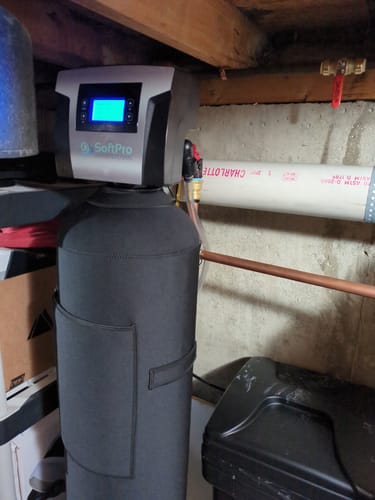
Now that I've lived with the SoftPro ECO for eight months, I can provide a realistic assessment of its real-world performance across different seasons and usage patterns.
Water Quality Transformation: The improvement in water quality has been dramatic and consistent. I test our water monthly with the same TDS meter I used initially. Our incoming water still measures around 380 PPM, but post-softener readings consistently show 85-95 PPM - a reduction that translates to noticeably soft water throughout the house.
Regeneration Efficiency: The demand-initiated regeneration has proven very efficient for our usage patterns. With four people in the house, the system regenerates approximately every 6-7 days during normal usage, and every 4-5 days when we have guests or do extra laundry. This matches closely with the capacity calculations I made during research.
Seasonal Performance Variations: I've noticed interesting seasonal differences in performance. During summer months when we're watering gardens and filling our above-ground pool, the system works harder but maintains consistent output quality. Winter usage drops significantly, extending time between regeneration cycles.
Salt Consumption Reality: I track salt usage carefully since this represents the major ongoing operational cost. We use approximately 40 pounds of salt monthly during normal usage periods. At current prices for high-quality solar salt, this costs us about $12-15 per month - well within my budgeted expectations.

Flow Rate and Pressure: One concern I had was whether the system would reduce water pressure noticeably. In practice, I measure virtually no pressure drop during normal usage. Even during high-demand periods like simultaneous showers and dishwasher operation, pressure remains strong and consistent.
System Reliability: The SoftPro ECO has operated flawlessly for eight months without any malfunctions, error codes, or service calls. The SoftPro Valve has maintained accurate programming and timing, and all mechanical components appear to be holding up well to regular cycling.
Bypass Valve Functionality: I've used the bypass valve several times for maintenance and testing purposes. It operates smoothly and provides complete isolation when needed, allowing me to service the system without interrupting household water supply.
Daily Life Impact and Family Benefits
The most significant changes have been in day-to-day household experiences that you don't fully appreciate until they improve dramatically.
Personal Care Improvements: My wife's hair transformation has been remarkable. She's been able to reduce her conditioning treatments and expensive clarifying shampoos because her hair no longer accumulates mineral buildup. Our daughter's skin sensitivity issues have largely resolved, particularly during winter months when dry air previously combined with mineral-laden water to create irritation.
Cleaning and Household Chores: Our glassware now emerges from the dishwasher crystal clear without any spots or film. I no longer need to hand-dry glasses to avoid mineral deposits. Soap and detergent work so much more effectively that we've actually reduced the amounts we use while achieving better cleaning results.
Appliance Protection: The most significant long-term benefit is appliance protection. Our dishwasher's interior looks cleaner than it has in years, with no mineral buildup on heating elements or spray arms. The coffee maker no longer requires monthly descaling treatments, and our washing machine operates more quietly without mineral deposits interfering with moving parts.
Unexpected Discoveries: I wasn't expecting soft water to affect our laundry as dramatically as it has. Towels and clothing feel noticeably softer and colors appear more vibrant. We've been able to reduce fabric softener use significantly while achieving better results.
Visitor Reactions: Multiple guests have commented on the quality of our water, particularly when showering. Several friends have asked about our system after noticing how much better their hair and skin felt after visiting.
Seasonal Comfort: During winter months, the combination of soft water and our humidifier creates much more comfortable conditions. Previously, hard water contributed to skin dryness that required constant lotions and treatments.
Operational Costs and Long-Term Economics
Understanding the true cost of ownership has been important for evaluating whether this investment makes financial sense for our household.
Salt Costs: As mentioned earlier, we use approximately 40 pounds of salt monthly at a cost of $12-15. I buy high-quality solar salt in bulk to minimize per-pound costs and ensure optimal system performance.
Water Usage for Regeneration: Each regeneration cycle uses about 50 gallons of water. With regeneration occurring every 6-7 days, this adds roughly 200-250 gallons monthly to our water bill. At our local rates, this costs approximately $3-4 monthly.
Electricity Consumption: The SoftPro Valve draws minimal electricity for its control systems and regeneration motor. I estimate the annual electrical cost at under $15 based on our local utility rates.
Maintenance and Service: Eight months in, I haven't required any professional service or replacement parts. The system includes a 10-year warranty on major components, which provides peace of mind for long-term ownership.
Cost Savings Generated: We've reduced soap, detergent, and personal care product purchases by approximately $25-30 monthly. The improvement in cleaning efficiency means we use less product while achieving better results.
Appliance Protection Value: While harder to quantify immediately, protecting our water heater, dishwasher, washing machine, and other appliances from mineral buildup should extend their lifespan significantly. This represents substantial long-term value.
Total Cost Analysis: Monthly operational costs run approximately $18-22, while savings on cleaning products and appliance protection easily justify this expense. The initial investment should pay for itself within 3-4 years through measurable savings and improved appliance longevity.
Honest Assessment of Limitations and Minor Drawbacks
No product is perfect, and the SoftPro ECO has a few limitations worth discussing honestly.
Space Requirements: The system footprint is larger than I initially anticipated. Between the main unit and brine tank, you need approximately 4 feet by 2 feet of floor space, plus clearance for salt loading and maintenance access.
Regeneration Noise: While not excessively loud, the regeneration cycle does produce noticeable mechanical sounds. If you have sensitive sleepers and install the system near bedrooms, this could be disruptive even during off-peak hours.
Salt Loading: Adding salt to the brine tank every month isn't difficult, but it does require lifting 40-pound bags and pouring them carefully to avoid spills. For some homeowners, this ongoing physical requirement might be challenging.
Water Taste Adjustment: Soft water has a different taste than hard water due to the sodium ion exchange process. While not unpleasant, it took our family about two weeks to adjust to the difference. Some people prefer to install a separate drinking water filter to address taste preferences.
Regeneration Scheduling: While the demand-based regeneration is efficient, you can't completely predict when it will occur. Occasionally, regeneration happens during higher-usage periods, though the bypass softpro water softener for city water valve allows continued water access.
Initial Investment: The upfront cost is substantial - several thousand dollars including installation supplies. While the long-term economics work out favorably, the initial expense represents a significant household investment.
These limitations are relatively minor compared to the benefits we've experienced, but they're worth considering if you have specific space, budget, or sensitivity constraints.