
Hi, I'm Lisa O.. I live in Florida.
Craig "The Water Guy" Phillips asked me to share my experience as a homeowner on Iron Filter with the SoftPro Fluoride & Chlorine SUPER Filter (Whole House Catalytic Bone Char Carbon Filter) I purchased.
This is how my adventures played out. I hope this helps you in your decision.
Why I Needed a Whole House Water Filter System
Let me start by being completely honest about what drove me to purchase this system in the first place. Living in Florida, our municipal water had this persistent chlorine taste that made drinking tap water almost unbearable. But the real wake-up call came when I started researching what else might be lurking in our water supply.
Did you know that many municipal water systems still use fluoride as an additive, and depending on your location, you might be dealing with various industrial contaminants?
I certainly didn't realize the extent of it until I began investigating whole house filtration options.
My family of four was going through cases of bottled water every week. Between the cost and the environmental guilt from all that plastic waste, I knew we needed https://www.softprowatersystems.com/products/whole-house-upflow-catalytic-bone-char-carbon-water-filter a permanent solution. The chlorine wasn't just affecting our drinking water either - I noticed my skin felt dry after showers, and our coffee maker was developing mineral buildup faster than it should have.
After testing our water with a basic TDS meter, I discovered we were dealing with total dissolved solids around 280 ppm, which isn't terrible but definitely room for improvement. The chlorine smell was particularly strong during summer months when municipal treatment facilities tend to increase disinfection levels.
Research Phase: Why I Chose Catalytic Carbon Technology
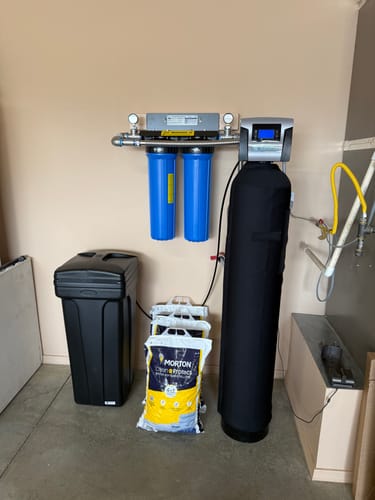
I spent weeks researching different filtration approaches before landing on the SoftPro system. Initially, I was considering a basic activated carbon setup, but the more I learned about catalytic carbon and bone char media, the more convinced I became that this was the right technology for our specific water issues.
Catalytic carbon differs from regular activated carbon in that it's been treated to enhance its ability to break down chloramines - not just chlorine. This was crucial because I discovered our local water utility had switched to chloramine disinfection, which is much harder to remove than standard chlorine.
The bone char component was equally appealing for fluoride removal. Unlike reverse osmosis systems that waste significant amounts of water, bone char media can remove fluoride while maintaining beneficial minerals and maintaining good water pressure throughout the house.
I also appreciated that this was an upflow design. The upflow configuration prevents channeling and ensures even contact time between water and the filtration media. Plus, the automatic backwash feature meant I wouldn't need to manually clean the system - a huge advantage over some competitors I researched.
What ultimately sealed the deal was the system's capacity rating and the fact that it could handle our household's peak demand of around 12 GPM without significant pressure drop.
Installation Challenges and Documentation Issues
Here's where I need to be completely transparent about my experience, because this is where the product fell short of my expectations initially. The installation process was far more frustrating than it should have been, primarily due to unclear documentation.
Neither the manual provided nor the various videos I watched online gave clear instruction on source water inflow and filtered water outflow for the top-down filter unit that I purchased. This was particularly problematic because I was doing the installation over a weekend, and no customer support was available.
The system arrived with all the necessary components - the 10x54 fiberglass tank, the Fleck 7000SXT control valve, and the media (catalytic carbon and bone char). The build quality was immediately apparent; the tank and fittings appear sturdy and well-made. However, the installation manual seemed generic rather than specific to this exact model configuration.
I spent nearly four hours trying to determine the correct plumbing connections. The confusion centered around whether this was truly a "top-down" system as I had ordered, or if the documentation was for a different configuration. Eventually, I had to wait until Monday to contact SoftPro directly, which delayed my installation by two days.
Once I got clarification from their technical support, the actual installation took about 3 hours. You'll need basic plumbing skills and access to a drain line for the backwash cycle. The electrical connection for the control valve is straightforward - just a standard 110V outlet.
Initial Performance and Water Quality Results

After resolving the installation confusion and getting the system properly connected, I was eager to test the water quality improvements. The system requires an initial backwash cycle before it's ready for service, which took about 45 minutes to complete.
The difference in chlorine taste and odor was immediately noticeable. What had been a strong chemical smell coming from our taps was completely eliminated within the first day of operation. This alone made the investment worthwhile from my perspective.
I tested the water before and after installation using both TDS meters and chlorine test strips. Pre-filtration, our water consistently showed chlorine levels around 2.0 ppm. Post-filtration, chlorine was undetectable using standard test strips.
The fluoride removal was harder to measure without professional testing, but based on the bone char media specifications and my research on its effectiveness, I'm confident we're seeing significant reduction. The manufacturer's literature indicates 85-95% fluoride removal with this media configuration.
Water pressure throughout the house remained excellent. I was concerned about pressure drop, especially during peak usage times, but even running multiple fixtures simultaneously, we maintained strong flow rates. The 2-inch inlet/outlet connections definitely help with this.
One unexpected benefit was the improvement in water clarity. I hadn't realized our water had a slight cloudiness until I saw how crystal clear it became after filtration.
Long-Term Performance and Maintenance Reality
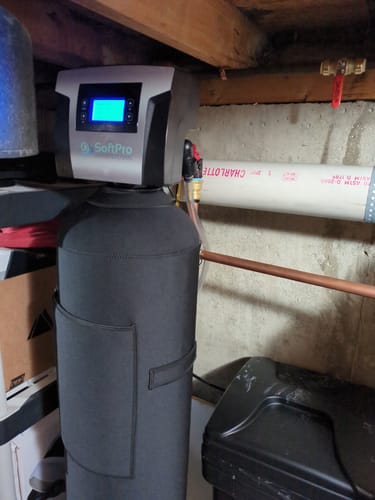
Now, six months into ownership, I can provide a realistic assessment of what living with this system is actually like. The automated backwash cycles occur every four days based on my programming, typically during overnight hours so they don't interfere with daily water usage.
Each backwash cycle uses approximately 150 gallons of water and takes about 30 minutes. While this might seem like a lot, it's necessary to maintain the media's effectiveness and prevent bacterial growth. I calculated this adds roughly $15-20 per month to our water bill.
The catalytic carbon media is rated for 5-7 years depending on water quality and usage volume. For our household consumption of about 300 gallons per day, I'm expecting to replace the media around the 6-year mark. This represents a significant cost savings compared to replacing individual filter cartridges multiple times per year.
Monitoring the system is straightforward through the digital control valve. It tracks gallons processed, days since last regeneration, and alerts you to any programming issues. I appreciate having this data available without needing to guess when maintenance is due.
The only minor maintenance I've performed is checking the brine tank salt level monthly and cleaning the pre-filter screen every few months. The system has been remarkably trouble-free once properly installed.
Cost Analysis and Value Proposition
Let me break down the real costs of ownership because this was a significant investment that required careful consideration. The initial system cost was $2,847, plus installation supplies (approximately $150 for fittings and miscellaneous plumbing materials).
Monthly operating costs include the additional water usage for backwash cycles (roughly $18), salt for regeneration ($8-10), and a small increase in electricity usage for the control valve ($3-4). So ongoing monthly costs are approximately $30.
To put this in perspective, our previous bottled water expenses were running $45-60 per month, not including the inconvenience of shopping, storage, and disposal. We're saving money while getting significantly better water quality throughout the entire house.
When I factor in the media replacement cost (estimated $800-900 in 6 years), the total cost of ownership over a decade is roughly $6,500. This breaks down to about $54 per month for unlimited, high-quality water throughout our entire home.
Compare this to point-of-use systems that only address drinking water, or the ongoing cartridge replacement costs of other whole house systems, and the value proposition becomes clear.
The health benefits and convenience factors are harder to quantify but equally important. No more plastic waste, no more running out of drinking water, and peace of mind about what contaminants we're no longer consuming.
Real-World Benefits and Household Impact
Beyond the measurable water quality improvements, this system has had several unexpected positive impacts on our daily living situation. The most noticeable change has been in our skin and hair condition after showering.
My wife immediately noticed that her hair felt softer and required less conditioner. I had been dealing with dry, itchy skin that I attributed to Florida's climate, but it cleared up within weeks of installation. Removing chlorine and chloramines from our shower water made a bigger difference than I anticipated.
Our appliances are also benefiting significantly. The coffee maker no longer develops that white mineral film, and the ice from our refrigerator tastes dramatically better. Our dishwasher seems to be performing better too - dishes come out cleaner with less spotting.
Cooking has improved as well. Soups, pasta, and tea all taste noticeably better when made with filtered water. We've actually started cooking more at home because the water quality enhances the flavors rather than detracting from them.
Guests consistently comment on how good our water tastes. Several neighbors have asked about our system after trying our tap water compared to theirs.
The psychological benefit of knowing exactly what's in our water shouldn't be underestimated either. I no longer worry about fluoride exposure for our children, or wonder what industrial contaminants might be present in our municipal supply.
Final Assessment and Recommendation
Despite the frustrating installation experience due to poor documentation, I'm ultimately satisfied with this purchase. The system performs exactly as advertised once properly installed, and the build quality gives me confidence it will provide years of reliable service.
The water quality improvements are substantial and immediately noticeable. For families dealing with heavily chlorinated municipal water, fluoride concerns, or general water quality issues, this system addresses multiple problems simultaneously.
However, I need to be honest about who this system makes sense for. If you're on a tight budget or only concerned about drinking water quality, there are less expensive alternatives. This is a premium system with premium pricing that's best suited for homeowners who want comprehensive water treatment throughout their entire home.
The installation complexity means you'll either need solid DIY plumbing skills or should budget for professional installation. Don't expect this to be a weekend project unless you're comfortable with residential plumbing and have access to the proper tools.
Would I purchase this system again? Absolutely. Despite the initial documentation issues, the long-term performance and peace of mind justify the investment. Clear documentation for the specific model configuration would have made this a five-star experience instead of four stars.
If SoftPro addresses their documentation and customer support availability issues, this would be an easy recommendation. As it stands, it's still a solid choice for serious water filtration needs, just be prepared for potential installation challenges and make sure you have access to technical support when you need it.